How to Save Time on Healthy Food Every Week
Stop Buying Food the Hard Way: One Change That Can Save You Time Every Week
If you are busy, healthy eating usually does not fail because you do not know what good food looks like.
It fails because the good food is not there when you need it.
You finish work late.
You are hungry.
The fridge is half empty.
The supermarket means another trip.
So you grab whatever is easiest.
The solution is not more discipline.
It is making the better choice easier.
The high-ROI habit
Pick one food your household uses constantly and stop buying it reactively.
Set up a reliable supply.
It could be:
eggs every week
meat every month
fruit and vegetables on a repeat order
frozen food delivered in bulk
yoghurt, oats or other staples added automatically to your grocery order
Once it is set up, you stop thinking about it.
That saves more than money.
It saves decisions.
And when your working day is already full of decisions, that matters.
Why this works
Every time you run out of something important, you create another opportunity for convenience food to win.
If the food is already in the house, you can make a decent meal in minutes.
That means better nutrition requires less effort.
Think about eggs.
They are simple, versatile and provide protein alongside several vitamins and minerals.
But the real value is not that eggs are some magical food.
It is that they can become an easy default.
Eggs with toast.
Eggs with potatoes.
An omelette.
Boiled eggs with lunch.
A fast meal when everything else has gone wrong.
Your 10-minute task
Look at the five foods you buy most often.
Pick one.
Then find out whether you can:
buy it in a larger quantity
have it delivered
get it from a local supplier
set up a repeat order
store some of it in the freezer
You only need one win.
If that saves you one supermarket trip every week, that could mean 50 fewer trips over a year.
That is a far bigger return than another diet rule.
Watch the real-life example
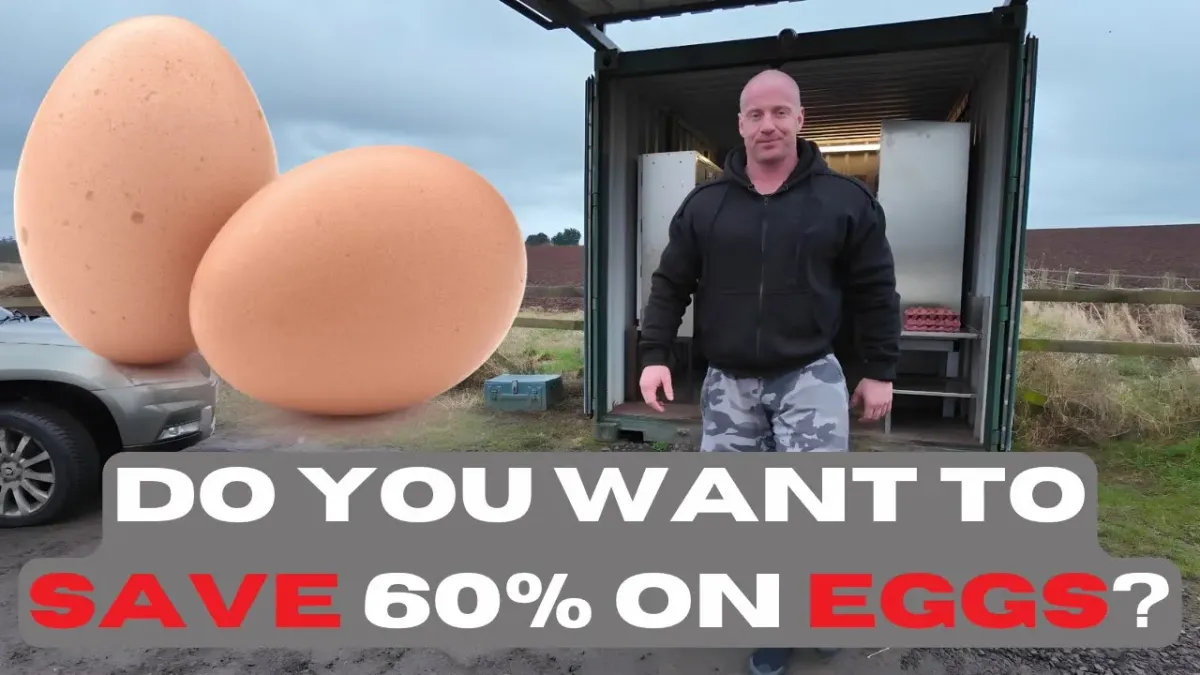
In the video, I show how I used the same idea with eggs.
The important part is not how many eggs I buy.
It is the system.
You can apply exactly the same principle to whatever foods your household uses most.


