Is Bread Bad for Your Metabolism? How to Choose Better Bread Without Giving It Up
Is Bread Bad for Your Metabolism? How to Choose Better Bread Without Giving It Up
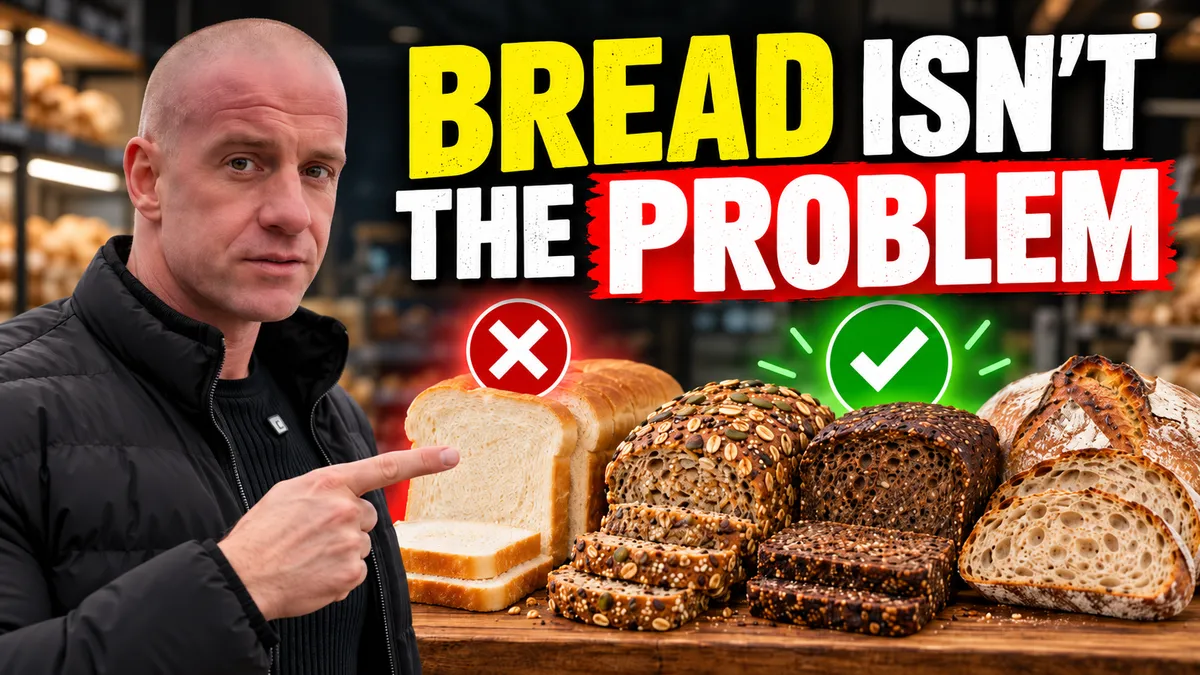
Bread is not the problem.
The type of bread you choose, how much you eat, what you eat with it and how it fits into the rest of your diet matter far more.
That is good news.
Because if you enjoy bread, you do not need to remove it from your life just because you want to lose fat, improve your energy or eat healthier.
For most busy people, extreme food rules create more problems than they solve.
A better approach is learning how to make a better choice in about 20 seconds while standing in the supermarket.
That is exactly what I break down in the video below.
Watch: Which Bread Should You Actually Be Eating?
In the video, I compare different types of bread and show you what I personally look for when choosing one.
We cover:
white bread
wholegrain bread
rye bread
sourdough
sprouted grain bread
supermarket bread
bakery bread
fibre
ingredients
blood sugar
hunger
digestion
And most importantly, how to continue eating foods you enjoy without feeling like you are permanently "on a diet."
Bread Does Not Need to Be Removed From a Healthy Diet
One of the biggest mistakes I see people make with nutrition is dividing food into two groups.
Good food.
Bad food.
Bread often ends up in the bad group.
Then people remove it completely, stick to the new diet for a few weeks, get fed up and eventually go back to eating exactly as they did before.
That is not a nutrition strategy.
It is a temporary restriction.
The NHS actually includes bread and other starchy carbohydrates as part of a balanced diet and recommends choosing wholegrain, wholemeal or higher-fibre versions where possible. nhs.uk
So instead of asking:
"Should I stop eating bread?"
Ask:
"How can I make the bread I already eat work better for me?"
That is a much more useful question.
Start With Fibre
If I am standing in a supermarket comparing two loaves, one of the first things I look at is fibre.
Why?
Fibre can help you feel fuller and supports digestive health. Higher-fibre carbohydrate foods also tend to be digested more slowly than highly refined alternatives. nhs.uk
UK guidance recommends adults aim for around 30 grams of fibre per day, yet many people do not reach that amount. nhs.uk
Bread can help.
Instead of removing it, choose a version that contributes something useful to your diet.
The NHS classifies foods containing 6g or more of fibre per 100g as high fibre. nhs.uk
That gives you something measurable to look for rather than relying on clever packaging.
Wholegrain Bread vs White Bread
White bread is normally made using more refined flour.
During refining, some of the fibre-containing parts of the grain are removed.
Wholegrain and wholemeal breads retain more of the grain and are generally higher in fibre and micronutrients.
That does not mean eating two slices of white bread suddenly destroys your metabolism.
It means that if bread is something you eat regularly, choosing a higher-fibre version can improve the overall quality of your diet.
The NHS specifically recommends wholemeal, granary and higher-fibre breads as useful ways of increasing fibre intake. nhs.uk
Small choice.
Repeated frequently.
That is where habits become powerful.
What About Blood Sugar?
This is another area where bread gets oversimplified.
Highly refined carbohydrates can generally produce a faster rise in blood glucose than foods containing more intact wholegrains and fibre. Fibre slows digestion, which can moderate the glucose response to a meal. Harvard Health
But your response is influenced by much more than the colour of the bread.
It can depend on:
the type of flour
amount of fibre
grain structure
serving size
fermentation
what you eat with it
your individual glucose control
This is why I do not like blanket rules.
Nutrition works better when you understand the context.
Is Rye Bread Better?
Rye can be an excellent option, particularly when it contains a high proportion of wholegrain rye.
Research comparing wholegrain rye products with refined wheat bread has found greater feelings of fullness in some trials. PubMed
Again, the word rye on the front of the packet does not tell you everything.
Turn it around.
Read the nutrition information.
Look at the fibre.
Look at the ingredients.
Look at what proportion of the bread is actually made from rye or wholegrains.
Marketing is on the front.
Useful information is normally on the back.
Is Sourdough Better for You?
Sourdough is interesting because fermentation changes the structure and chemistry of the bread.
Some research has found lower post-meal glucose responses after certain sourdough breads compared with conventional breads, particularly when wholegrain flour is involved. PubMed
But this needs context.
A newer systematic review concluded that current evidence is not strong enough to say sourdough consistently improves glucose and insulin responses compared with yeast-fermented bread in healthy people. PubMed
That is why "sourdough" should not become another health halo.
A highly refined sourdough loaf is still different from a high-fibre wholegrain sourdough.
Look at the whole product.
Not one word on the label.
What About Sprouted Grain Bread?
Sprouted grain breads can be another useful option.
Depending on the product, they may contain whole grains, seeds and a useful amount of fibre and protein.
But again, don't buy something simply because sprouted sounds healthier.
Compare the nutritional information.
If one expensive "health bread" contains less fibre than a normal wholemeal loaf beside it, the expensive packaging isn't doing much for you.
This is why learning to read food labels is such a useful skill.
Once you know what you are looking for, you stop relying on marketing.
My Simple Bread Shopping Rule
I don't want you standing in Tesco for 15 minutes analysing bread.
Keep this easy.
When comparing breads, I would generally look for:
1. Wholegrain or wholemeal ingredients
Ideally, wholegrain flour should feature prominently in the ingredients.
2. Higher fibre
Compare similar products and favour the bread providing more fibre.
3. A sensible ingredient list
A long ingredient list does not automatically make food unhealthy, but comparing products can help you identify a simpler bread if that is what you prefer.
4. Something you actually enjoy
This matters.
There is no point buying the healthiest loaf in Britain if you hate it and throw it in the bin three days later.
The goal is consistency.
The Bigger Mistake Is What Goes ON the Bread
People sometimes spend ten minutes worrying about whether rye is marginally better than wholemeal and then turn the sandwich into a 900-calorie meal.
Bread rarely exists alone.
Think about the complete meal.
For example:
Wholegrain bread.
Chicken.
Salad.
Tomato.
A sensible amount of sauce.
Fruit on the side.
Water.
That can be a completely different nutritional experience from:
Refined bread.
Processed filling.
Large quantities of cheese.
Mayonnaise.
Crisps.
Chocolate.
Sugary drink.
Both contain bread.
The bread was never the complete story.
Protein Makes the Meal More Useful
For the busy adults I coach, I usually want meals to contain a meaningful protein source.
That could include:
chicken
turkey
lean beef
eggs
tuna
salmon
cottage cheese
Greek yoghurt
beans or pulses
So instead of having toast on its own and being hungry again shortly afterwards, build a proper meal.
For example:
Wholegrain toast + eggs + fruit
or
Rye bread + chicken + salad
or
Wholegrain sourdough + cottage cheese + tomatoes
You have not removed the bread.
You have improved the meal.
That distinction matters.
This Is What Sustainable Nutrition Actually Looks Like
You do not need to spend your life avoiding restaurants, bread, pasta, potatoes or every other food somebody on social media has decided is "bad."
You need a structure.
I have worked in the military.
I have spent years offshore.
I run businesses.
I have children.
I train.
I understand what happens when life gets busy.
A nutrition plan that requires perfect conditions will eventually fail when life stops being perfect.
So I prefer systems that survive real life.
If you like bread, we find a better bread.
If you like sandwiches, we build better sandwiches.
If you eat at work, we make work meals easier.
If you travel, we create travel options.
Your lifestyle does not need to fit the diet.
The diet should fit your lifestyle.
Your Metabolism Does Not Need Another Extreme Diet
One food does not control your metabolism.
Your overall nutrition, muscle mass, activity, sleep, recovery, energy intake and lifestyle all play a role.
This is why I focus on simple daily habits rather than banning foods.
A person who spends years moving between strict diets and overeating does not need another list of foods they are forbidden from eating.
They need consistency.
That might start with something as simple as changing the bread they buy every week.
That seems small.
But small decisions repeated hundreds of times become meaningful.
Try This Next Time You Buy Bread
Turn the packet around.
Compare three loaves.
Look at the fibre.
Look for wholegrains.
Read the ingredients.
Pick one you actually enjoy.
Then use it to build a proper meal containing protein and nutrient-dense foods.
That entire process might take one minute.
Once you have found a bread you like, you don't need to think about it again.
That is how I want nutrition to work.
Make a good decision once. Turn it into a habit. Remove the need to keep making the decision.
Watch the Full Bread Experiment
In the video above, I go much deeper into the different bread options, including rye, wholegrain, sourdough and sprouted breads.
I also show examples of breads available in different parts of the world and explain exactly what I look for when reading the label.
If bread is something you eat regularly, watch the video before your next supermarket trip.
You may never look at the bread aisle the same way again.
You Don't Need to Give Up the Foods You Love
If you feel like every attempt to improve your health eventually turns into another restrictive diet, the answer may not be more restriction.
It may be better personalisation.
Inside my Metabolic Acceleration Strategy System™, we build nutrition around your actual life.
Your work.
Your family.
Your schedule.
Your food preferences.
Your training.
Your habits.
Your goals.
The objective is not to make you dependent on a diet plan.
It is to make healthy decisions simple enough that they eventually become automatic.
If you are a busy professional or parent and you want someone to take the guesswork out of your nutrition, you can book a free consultation with Gorilla & She Coaching.
We'll look at where you are now, what is getting in the way, and what system would realistically work for you.
No extreme diet.
No need to give up bread.
Just a better strategy.
Frequently Asked Questions
What is the healthiest bread?
There is no single healthiest bread for everyone. As a practical starting point, look for wholegrain or wholemeal bread with a good fibre content and ingredients that fit your dietary needs.
Is wholemeal bread better than white bread?
Wholemeal and wholegrain breads generally contain more fibre than white bread because more of the original grain is retained. The NHS recommends choosing higher-fibre and wholegrain versions where possible. nhs.uk
Is rye bread healthy?
Wholegrain rye can be an excellent source of fibre. Some controlled trials have also found greater satiety after wholegrain rye bread compared with refined wheat products. PubMed
Is sourdough healthier than normal bread?
Potentially, but it depends on the bread. Some studies report favourable glucose responses, while more recent reviews conclude that the evidence is not yet consistent enough to say sourdough is always metabolically superior. PubMed
Can I eat bread while losing fat?
Yes. Fat loss depends on your overall energy balance and dietary pattern, not whether one particular food is present. Bread can form part of a balanced diet. nhs.uk
What should I look for on a bread label?
Look at the wholegrain content, fibre per 100g, overall nutritional information and ingredient list. In the UK, foods providing at least 6g of fibre per 100g qualify as high fibre


